

The global pilot shortage isn’t just a lingering industry headline. You might have read it somewhere and you think this is the moment to pursue a pilot career.
However, translating the market demand into a personal success story and landing in the left seat of a commercial jet depends entirely on one monumental, costly decision: where you choose to complete your training, receive certification, and gain class rating.
That’s why selecting the right flight academy serves as the absolute foundation of your personal aviation safety culture, your future career trajectory, and your family’s long-term financial security.
In an increasingly crowded training landscape, making an uninformed decision can mean the difference between graduating on time as a highly sought-after professional or being left behind with non-standard hours.
This guide breaks down the non-negotiable criteria you must evaluate. The how, which will guide you completely from the academy reputation, the instructors, the careers pathway, and how it could meet your financial plan.
We present this guide to help you confidently navigate the options and find the ideal academy that aligns with your professional airline goals.
1. Pay Attention to Accreditation, Reputation, and Instructor Quality
To protect your financial investment and guarantee future employability, the very first step in evaluating a flight academy must focus on formal accreditation and regional certifications.
It is crucial to verify that your chosen flight school operates as an Approved Training Organization (ATO) officially recognized by Indonesia’s Directorate General of Civil Aviation (DGCA).
While backing from global networks aligned with international standards (such as EASA frameworks) adds exceptional institutional value, local civil aviation authority approval is what legally clears you for takeoff in the regional job market.
These certifications serve as an ironclad guarantee of a school’s strict adherence to uncompromising structural safety standards, audited maintenance practices, and structured training syllabi.
Beyond basic regulatory compliance, an academy’s institutional footprint and historical reputation in the region will heavily dictate the trajectory of your job hunt. A big-name flight school shouldn’t just operate in isolation.
Because a school should leverage an expansive international network that connects local cadets directly to global general aviation ecosystems.
A strong track record of graduates successfully transitioning into commercial flight decks acts as a powerful brand on your credentials. Alpha Aviation Group (AAG) Indonesia itself carries this prestige, born from the long, respected history of FlyBest Flight Academy. We carry an established footprint, standard cockpit fleets, and a good reputation directly to our Batam campus.
Ultimately, the daily translation of this institutional prestige into your personal cockpit technical mastery depends entirely on the capability of the person occupying the right seat during your flight profiles.
Certified Flight Instructors (CFIs) do far more than teach basic flight mechanics. Instructors will actively forge your situational awareness, crew coordination habits, and the professional manner expected of a future airline captain.
You should specifically seek out academies characterized by high instructor retention rates and highly standardized teaching methodologies, which successfully eliminate confusing instructional variations between lessons.
Also learning directly from seasoned mentors who possess actual commercial airline or deep operational experience ensures a high-fidelity transfer of knowledge. It will help you build the resilient psychological baseline and procedural discipline required to command the skies confidently.
2. Plan Carefully the Flight Training Pathways
When unpacking the modern flight training landscape, the next consideration you will encounter is the distinction between an integrated and a modular training pathway. Integrated programs, such as those anchoring AAG Indonesia, consolidate the entire journey into a single, continuous curriculum.
Legally and structurally, integrated programs enforce a rigid, airline-style syllabus where theoretical ground school and practical flight lessons are meticulously synchronized from day one.
Because of this highly structured, immersive environment, civil aviation authorities often permit integrated tracks to qualify cadets for commercial certification with optimized, reduced total flight hours, providing a highly efficient and streamlined route to professional competency.
Conversely, modular training (which is also available on AAG) allows a cadet to string together separate blocks of training over time. Moving from a Private Pilot License (PPL) to a Commercial Pilot License (CPL) and Instrument Rating (IR) incrementally. While a modular path gives you flexibility in terms of timing and financial, this path frequently results in a protracted and unpredictable timeline.
The next crucial decision involves comparing a traditional multi-year university degree against the immersive environment of a specialized ab-initio academy. While the university route provides a broader collegiate education, it demands a significant multi-year time commitment before a graduate can officially enter the job market.
On the other hand, ab-initio pathway programs are explicitly engineered for speed and precision, compressing advanced pilot training into a focused 15-month curriculum designed to accelerate your progression directly into a commercial cockpit.
Whether your goal is to fly domestic routes for an island-hopping regional carrier or command wide-body jets for a major international airline, choosing the training model that mirrors your specific career timeline is the first definitive step toward securing your seat.
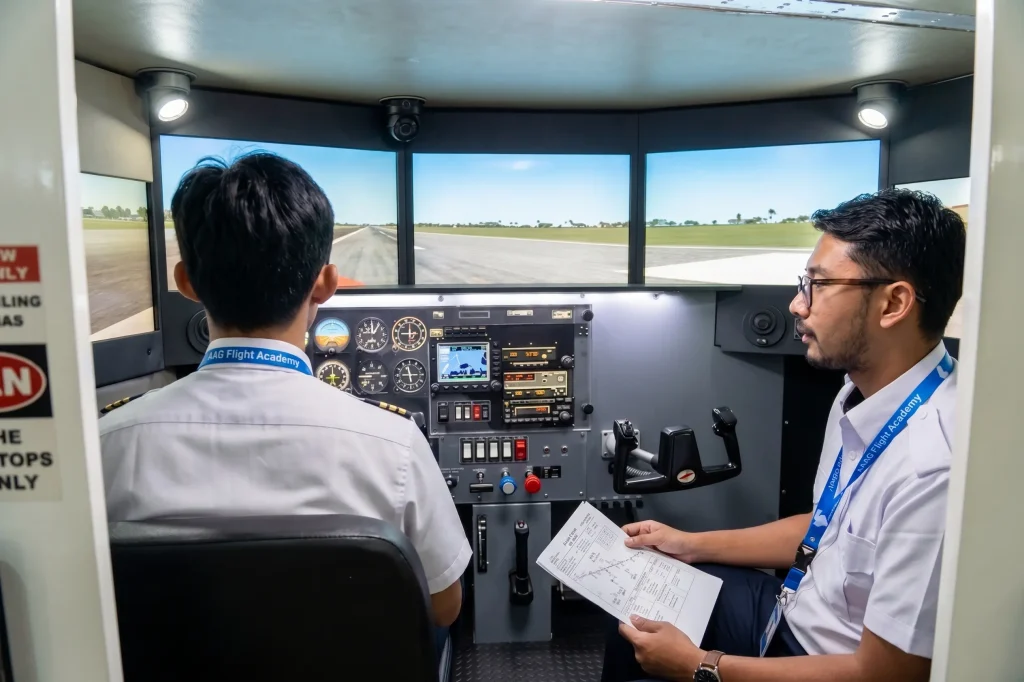
3. Understand The Academy Alignment with Career Pipelines
Once you graduate with the necessary certifications, multi-engine ratings, and instrument endorsements needed for an officer career, the next critical hustle is bridging the gap between initial license acquisition and a commercial cockpit. This is where the power of formalized airline cadet programs and direct transition pipelines becomes a non-negotiable asset.
While standard flight schools merely train individuals to satisfy baseline regulatory checkrides, a top-tier training academy maintains active, deeply integrated relationships with major commercial carriers to optimize graduate placement.
Prospective students and their families must look past the scenic photography inside corporate brochures and rigorously interrogate an institution’s verified post-graduation employment records.
The gold standard for measuring an academy’s true instructional quality and industry authority is a transparent account of where graduates are actually flying after passing their commercial license.
[showcase alumni testimonial]
Navigating the modern aviation market successfully demands proper long-term consideration, because your professional growth depends heavily on networking opportunities that extend far beyond the cockpit doors.
Moreover, top-tier institutions actively champion professional development and industry inclusivity by encouraging deep involvement with leading aerospace organizations, such as the International Council of Aircraft Owner and Pilot Associations (IAOPA) or Women in Aviation International (WAI).
The active institutional engagement ensures that your foundational years in flight training don’t just secure your first first officer assignment, but actively prepare you to ascend into senior fleet leadership and command roles across the global aviation ecosystem.
4. Choose one that meets Financial Plan: Costs, Financing, and ROI
Finally, aspiring aviators must approach the selection of a flight academy with a deep understanding of its financial realities and true Return on Investment (ROI).
Total capital requirements vary depending on the chosen pathway. Independent modular operators or regional flight clubs often quote baseline packages ranging between $50,000 and $80,000 USD to cover primary commercial certificates.
In contrast, global network academies typically present higher upfront price tags but bundle advanced multi-engine land ratings, jet transition courses, regulatory fees, and structured airline placement networks into a single, predictable investment.
To celebrate its expanded global footprint, AAG Indonesia is currently offering highly competitive pricing for our comprehensive integrated Airline Pilot Pathway programs. Contact us for further information.
However, navigating the economics of flight training requires looking far beyond the initial numbers published in a corporate brochure, as looking solely for the “cheapest” hourly rental rate frequently exposes cadets to expensive hidden liabilities.
Most schools in Indonesia often present lower base fees on paper but lack the operational infrastructure to sustain a continuous training schedule.
If an academy suffers from poor fleet maintenance reliability, low aircraft dispatch numbers, or instructor shortages, a cadet’s progression can abruptly stall. In aviation, these training gaps are financially punishing.
The reason is because prolonged delays cause immediate skill regression, forcing students to repeat costly flight hours and duplicate lessons just to regain baseline proficiency.
Consequently, a lower-cost, piece-meal program can suffer from timeline extensions that ultimately drive the final invoice far past that of a fixed-fee, high-utilization academy.
Transforming your professional aviation ambitions into a reality requires a pragmatic funding strategy designed around the modernized credit and sponsorship instruments available in 2026.
Given the specialized nature of flight school, traditional financial aid packages are frequently augmented by dedicated private aviation loans specifically tailored to cover 100% of flight hours, simulator sessions, and checking fees.
Beyond conventional debt structures, many forward-thinking candidates successfully mitigate their out-of-pocket tuition burden.
How? By meticulously securing highly coveted airline-sponsored training bonds. The bonds provide financial assistance or loan guarantees in exchange for a multi-year employment commitment upon graduation.
Otherwise, cadets should actively pursue prestigious, non-repayable institutional grants and awards. They have to aggressively target premier funding bodies such as the AOPA Foundation or the competitive Amelia Earhart Memorial Scholarship to secure their funding to the flight deck.
Conclusion
In conclusion, choosing the best flight training organization requires looking past flashy marketing campaigns and systematically evaluating the core pillars of pilot education: regulatory accreditation, technological infrastructure, flight instructor caliber, and direct operational pipelines to commercial carriers.
The flight academy you choose is not just a temporary training ground; it is the very first, most permanent entry on your professional aviation resume. By selecting a reputable academy that purposely challenges you in complex, high-utilization airspace with modernized fleets and sophisticated flight simulation training devices.
This way you are establishing an ironclad foundation of professionalism. The exposure to airline-standard operating procedures early on is what ultimately makes the high-stakes transition from a basic single-engine trainer to the cockpit of a multi-crew commercial jet completely seamless.
Ready to take the left seat of your career and transform your passion for flight into a premium commercial profession?
Your path to becoming an airline-ready commander starts by experiencing your future training environment firsthand. Contact AAG Indonesia today to schedule an immersive campus tour and an introductory discovery flight at our Batam facilities.
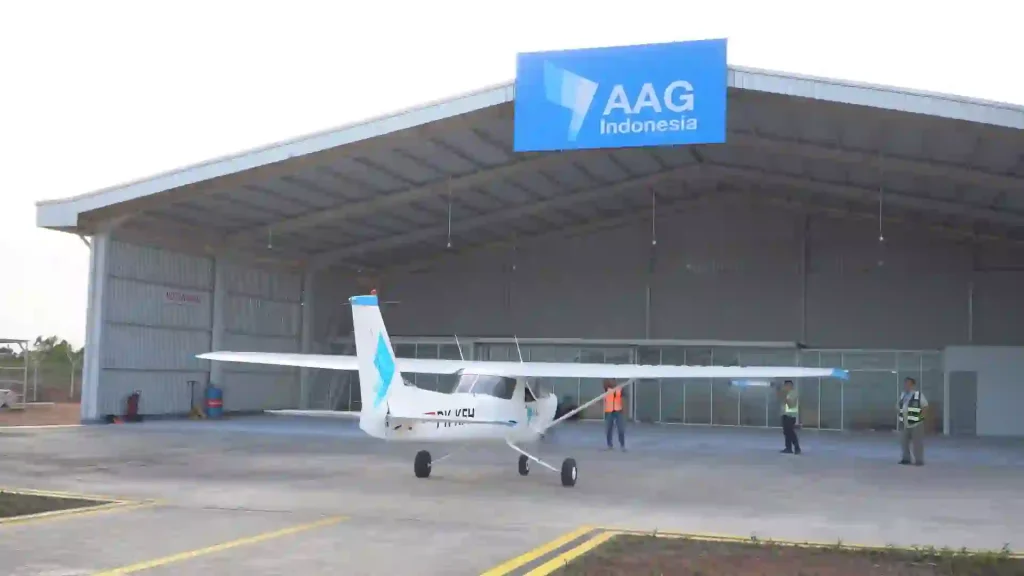
By walking through our specialized hangar, having flight discovery, and stepping directly into our advanced simulator bays, you and your family can witness world-class aviation education in action.
Reach out to our expert admissions team today at id.info@aag.aero or call 6281196955717, and secure your seat in our next limited intake. Your flight deck journey begins now.
Lastly, to help you evaluate a flight school, you can use this checklist table. You can take a screenshot of the questions for your notes.
| Facilities | Equipment |
| 1. Are the facilities clean, neat, and professional? 2. Is there space for studying, flight planning, and debriefing? 3. Are the facilities adequate for the number of cadets? 4. Is there storage, or other support services? | 1. What type of aircraft does the school use for training?2. Is the aircraft equipped for flight training? 3. Who does the maintenance on the aircraft? 4. Are the aircraft and simulator well maintained? 5. Does the school have simulators? 6. Do they have other support equipment you can use? |
| Curriculum | Instructor |
| 1. Does the school use a curriculum for private pilot training? 2. Do they use an online ground school or in-person classes? 3. Does the school have legal certification? 4. Can you have, or at least see, a copy of the syllabus? 5. Does the school actively use advanced simulators? 6. Is the school accredited to offer college credit? 7. Does the school use competency-based training? | 1. Can you use the simulators by yourself? 2. How many hours total time does your instructor have? 3. If your instructor left, who would you work with? 4. Could you see yourself spending many hours with this person? 5. How much experience does the chief flight instructor have? 6. What is the school’s management structure? |
| Others |
| 1. How long has the flight school been in business? 2. What is the overall success rate for first-time flight tests? 3. Does the flight school have an international network? 4. How many cadets have they graduated? 5. Are you required to sign a contract? 6. According to the school, what separates it from other operations? 7. Can you talk to current and past alumni? |