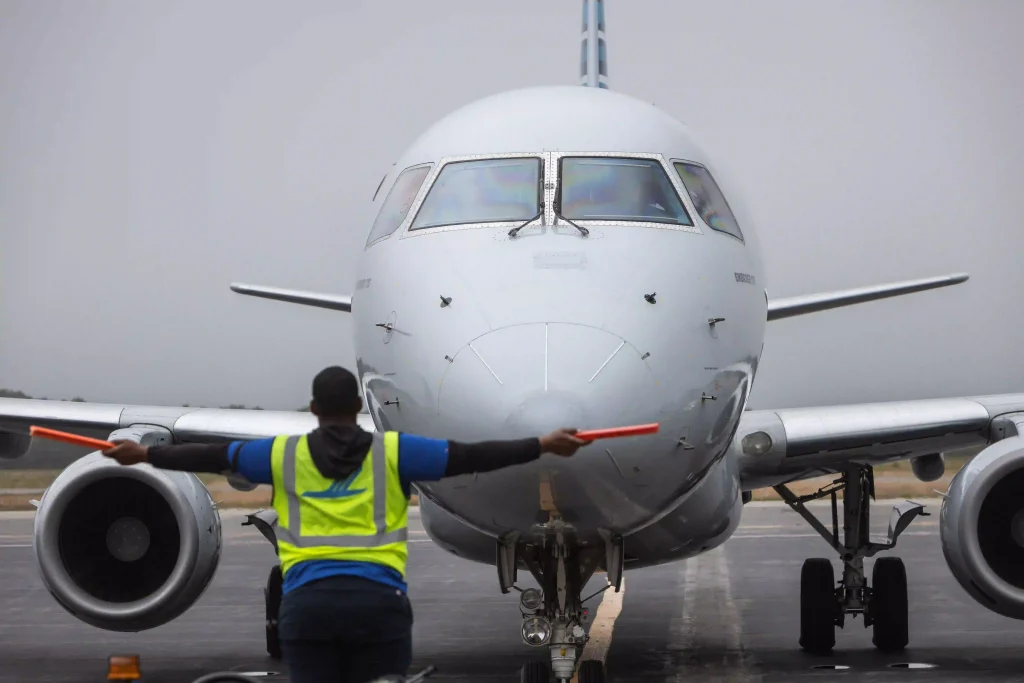
Observing a modern jetliner cruising at high altitude prompts a fundamental question: what developmental phases, regulatory examinations, and operational milestones must an aviator complete to earn the captain’s seat?
The civilian aviation is often perceived as an overwhelming maze of acronyms, technical terms, and conflicting training options. Central to this professional architecture are three primary flight crew licenses: the Private Pilot License (PPL), the Commercial Pilot License (CPL), and the Airline Transport Pilot License (ATPL).
Navigating the Pilot Certification Continuum
Rather than functioning as separate vocations, these credentials represent a progressive licensing hierarchy governed internationally by the International Civil Aviation Organization (ICAO) and administered domestically by the Directorate General of Civil Aviation (DGCA) under the Civil Aviation Safety Regulations (CASR).
Each tier builds upon the knowledge and flight proficiency of the preceding one, expanding operational privileges while enforcing tighter medical baselines and higher command responsibilities.
A legal distinction exists within this structure: the difference between non-commercial recreation and compensated flight operations. While recreational flying allows pilots to share direct operating expenses on a pro-rata basis, receiving any form of financial compensation or salary requires commercial licensing.
The restriction actually bridging the operational gap between an entry-level commercial pilot and a captain commanding wide-body transport aircraft is managed globally through the concept of the “frozen ATPL”.
At training institutions such as Alpha Aviation Group (AAG) Indonesia, prospective aviators encounter strategic choices regarding training methodologies. Each cadet selects between an all-inclusive integrated syllabus, a modular sequence, or using a flight instructor rating to build operational hours. This decision influences the candidate’s training timeline, capital deployment, and long-term career momentum.

PPL (Private Pilot License), The Gateway for Hobbyists
The Private Pilot License (PPL) is an initial qualification for operating single-engine aircraft under Visual Flight Rules (VFR). It is regulated under CASR Part 61 Subpart D and allows flight as pilot-in-command or co-pilot. However, additional ratings are required for specific flight conditions such as night operations.
To put simply, the legal scope of the PPL is strictly non-commercial. The license allows cadets to fly for recreation, transport family or colleagues, and conduct personal travel.
However, it has prohibition against receiving remuneration, salary, or financial compensation of any kind for flight services. While passengers may share direct operational expenses like fuel, oil, and direct airport landing fees, the flight cannot be conducted for commercial hire or enterprise profit.
PPL Key Requirements and Training Curricula at AAG Indonesia
Obtaining a PPL requires establishing core flight skills, spatial orientation, and basic aeronautical decision-making. To qualify for enrollment and licensing through the DGCA framework at AAG Indonesia, candidates must meet clear educational, medical, and flight criteria that are actually quite similar to our guide about how to become AAG Indonesia cadet. Here’s the summary:
- Age and Academic Baseline: Applicants must be at least 17 years old and hold a Senior High School diploma (SMA, SMK, or international equivalent). Non-science graduates must pass diagnostic assessments in applied mathematics and physics.
- Medical Standard: Regulations mandate a valid DGCA Class 2 Medical Certificate issued by the Balai Kesehatan Penerbangan (DGCA Pilot Health Center) in Jakarta for a PPL; because its test composition is similar to a Class 1 exam while offering a longer validity period, opting for a Class 2 Certificate is recommended for financial efficiency. You can learn more about the Medical Exam on AAG Indonesia Aviation Medical Examination (Medex) Guide.
- Language and Cognitive Aptitude: Candidates must present an official TOEIC score (Listening and Reading) of at least 600 or an equivalent English assessment, alongside passing psychological profiling and spatial aptitude evaluations conducted at the Batam facility. Read more about ICAO Language requirement on A Guide to ICAO English Proficiency Requirements for Pilots.
- Theoretical Ground School: A structured curriculum at AAG Indonesia’s Mega Techno City campus, covering air law, aerodynamics, aircraft systems, aviation meteorology, human performance, and navigational flight planning.
- Flight Training Experience: The DGCA-approved PPL flight syllabus at AAG Indonesia entails flight hours dual and solo flight instruction and 1 practical checkride hour. Training is conducted in single-engine Cessna 152 and Cessna 172 aircraft, supported by full-motion Redbird MCX Approved Aviation Training Devices (AATD).
The training program basically follows a four-stage instructional sequence: primary dual flight maneuvers, first solo flight, solo cross-country navigation, and checkride preparation. Prior to their first solo cross-country flight, cadets must demonstrate competency in crosswind operations, stall recovery, and emergency forced landings.
They must also show proficiency in managing diversions and applying standardized radio phraseology in controlled airspace. The course spans approximately five months, culminating in a formal DGCA practical flight evaluation conducted under VFR conditions.
Target Candidates and Strategic Purpose
The PPL caters to two distinct aviation profiles. For recreational flyers, business leaders managing private travel, and general aviation enthusiasts, the PPL represents a comprehensive standalone qualification. For prospective professional aviators, the PPL acts as a low-risk diagnostic phase, enabling candidates to confirm physiological adaptation, spatial orientation, and operational aptitude before committing to multi-year commercial aviation programs.

CPL (Commercial Pilot License) The Only Way to Step Into Professional Aviation
The Commercial Pilot License (CPL), codified under CASR Part 61 Subpart E, marks the legal threshold between uncompensated recreation and a professional aviation career. This credential authorizes the holder to act as pilot-in-command of an aircraft engaged in commercial operations or as a compensated co-pilot (First Officer) in multi-crew aircraft.
Earning a CPL change piloting from a personal pursuit into a commercial profession, granting legal access to diverse employment sectors:
- First Officer positions aboard regional turboprops and scheduled passenger jets
- Non-scheduled passenger charter operations and corporate business aviation
- Aerial survey, geographic mapping, and environmental monitoring
- Agricultural aviation, cargo feeder services, and humanitarian logistics
- Flight instruction (upon completing an authorized Flight Instructor Course)
Technical Training, Advanced Ratings, and Regulatory Thresholds
Transitioning from private pilot fundamentals to commercial flight operations requires greater technical precision, strict adherence to flight Standard Operating Procedures (SOPs), and mastery of advanced flight conditions.
A base CPL restricted to visual flight rules offers limited professional utility in modern air transport. Consequently, commercial aviators must secure supplementary operational ratings to achieve professional employability.
The professional flight qualification framework combines the base Commercial Pilot License with an Instrument Rating (IR). The Instrument Rating qualifies the pilot to navigate in Instrument Meteorological Conditions (IMC) solely through cockpit instrumentation and avionics systems, which is essential for airline operations. The Multi-Engine Rating teaches the aerodynamic and management techniques needed to control multi-engine aircraft, with particular focus on engine-out emergencies, asymmetric thrust dynamics, and single-engine performance limitations.
At AAG Indonesia, commercial pilot candidates typically enroll in the integrated Commercial Pilot License and Instrument Rating (CPL-IR) curriculum. Ground training expands to academic hours, while the flight phase aircraft flight in Cessna 172 aircraft alongside simulated instrument flight in the Redbird MCX system over an eight-month period.
Then, candidates must maintain a valid DGCA Class 1 Medical Certificate, the physical and mental health standard defined under CASR Part 67. This assessment requires intensive cardiovascular, ophthalmological, neurological, and audiometric testing conducted at the Balai Kesehatan Penerbang. Additionally, commercial candidates must hold an ICAO English Language Proficiency Level 4 or higher and pass extensive DGCA commercial theoretical examinations.
Strategic Career Insight: The Case for Integrated Pathways
A recurring mistake among aspiring airline pilots is completing a standalone PPL at a regional flying club before searching for an advanced commercial flight school. This fragmented modular method frequently leads to redundant theoretical training, scheduling delays, and incompatible flight log entries. Crucially, it can reinforce casual, non-standardized habits that conflict with airline multi-crew flight operations.
Integrated programs, such as AAG Indonesia’s Airline Pilot Pathway Program (APP), bypass this structural friction. Built as a 15-month ab-initio syllabus, the APP transitions candidates from zero experience through PPL fundamentals directly into advanced CPL cross-country operations, precision instrument approaches, and multi-engine simulation.
By aligning early flight training with commercial transport standards, integrated students eliminate instructional redundancies, decrease overall living costs, and practice airline-level SOPs from their first day in the cockpit.

ATPL (Airline Transport Pilot License): Overview of Flight Command
The Airline Transport Pilot License (ATPL), regulated under CASR Part 61 Subpart G, represents the certification level required for air transport command. The ATPL is the mandatory qualification required to serve as Pilot-in-Command (Captain) of scheduled commercial transport aircraft operating under CASR Part 121 (major scheduled airlines) or CASR Part 135 (large commuter and on-demand operations).
While a CPL permits an aviator to serve as First Officer in a multi-crew airliner, the legal authority, operational decisions, and overall safety of the aircraft, crew, and passengers rest with the ATPL-certified Captain.
Aeronautical Experience and Certification Requirements
Securing a full, unrestricted ATPL requires comprehensive theoretical understanding paired with extensive operational experience. The regulatory requirements established by the DGCA and international aviation bodies mandate:
- Age and Medical Authority: Applicants must be at least 21 years old and hold a valid DGCA Class 1 Medical Certificate requiring routine periodic revalidation.
- Theoretical Mastery: Candidates must pass comprehensive DGCA ATPL written examinations covering advanced aeronautical disciplines, including high-altitude aerodynamics, long-range international flight planning, advanced turbine systems, global meteorology, and human factors in high-capacity cockpits.
- Flight Time Milestones: Candidates must accumulate a minimum of 1,500 verified flight hours as a pilot, satisfying strict experience sub-categories:
- A minimum of 500 hours of cross-country flight time.
- A minimum of 100 hours of night flight time.
- A minimum of 75 hours of instrument flight time (in actual or simulated IMC).
- A minimum of 250 hours acting as Pilot-in-Command (or qualified Pilot-in-Command Under Supervision – PICUS).
Explaining the “Frozen ATPL”
A common misunderstanding in aviation training is the term “Frozen ATPL.” Aviation authorities do not issue a distinct physical license marked “Frozen ATPL”.
Rather, the term is an industry designation for a pilot who holds an active Commercial Pilot License with a Multi-Engine Instrument Rating (CPL/ME-IR) and has passed all required ATPL theoretical knowledge examinations, but has not yet reached the 1,500 flight hours needed for full license issuance.
The career progression follows a structured sequence:
- Theory Examination Phase: The candidate passes all 14 official ATPL theoretical examinations during flight school, securing formal regulatory credit for command-level knowledge.
- Frozen ATPL Status: Graduating from flight school with a CPL-IR and 150 to 200 total hours, the candidate holds a “frozen ATPL,” making them eligible for airline first-officer recruitment.
- Airline Entry and Type Rating: Upon recruitment by an airline, the pilot completes a type rating on an aircraft such as the Airbus A320 or Boeing 737, beginning line operations as a First Officer in the right-hand seat.
- Operational Hour Building: Flying scheduled airline routes, the First Officer accumulates the requisite 1,500 total hours, gaining cross-country, night, and PICUS experience under the supervision of senior captains.
- Command Upgrade Checkride: Once the 1,500-hour threshold is crossed and the airline selects the pilot for command upgrade, the candidate completes a DGCA command evaluation checkride in a Level D full-flight simulator.
- Unfreezing the License: Upon passing the checkride, the theoretical examination credits merge with the operational flight hours, officially “unfreezing” the credential into a full Airline Transport Pilot License and enabling the pilot to assume command as Captain in the left-hand seat.
Comparison Table: PPL, CPL, and ATPL
The regulatory progression across all three certification tiers is detailed in the structured matrix below, combining DGCA licensing mandates with the corresponding training curricula provided by AAG Indonesia:
| Certification Level | DGCA Regulatory Basis | Minimum Age | Medical Standard Required | Primary Operational Privileges | Cockpit Operational Role | AAG Indonesia Course Equivalent |
| Private Pilot License (PPL) | CASR Part 61, Subpart D | 17 Years Old | Class 2 Medical | Non-commercial recreational flying; transport of non-paying passengers under VFR | Pilot-in-Command (PIC) of light single-engine aircraft | Private Pilot License (PPL) Course |
| Commercial Pilot License (CPL / CPL-IR) | CASR Part 61, Subpart E | 18 Years Old | Class 1 Medical (Balai Kesehatan Penerbang) | Revenue-generating operations; receipt of financial compensation; IFR operations | PIC of commercial utility flights; Co-pilot (First Officer) in multi-crew airline cockpits | Commercial Pilot License & Instrument Rating (CPL-IR) / APP |
| Airline Transport Pilot License (ATPL) | CASR Part 61, Subpart G | 21 Years Old | Class 1 Medical (with recurring periodic reviews) | Unrestricted operational command of multi-crew commercial passenger transport aircraft | Pilot-in-Command (Captain) of scheduled airline operations (CASR Part 121/135) | Airline Pilot Pathway Program (APP) advanced theoretical ground school |
Strategic Pathway Integrated Pipelines vs. Modular Hour Building
The Integrated path, AAG Indonesia’s Airline Pilot Pathway Program (APP)
For ab-initio candidates targeting major commercial air carriers, an integrated training program offers an efficient and structured educational pathway. AAG Indonesia’s Airline Pilot Pathway Program (APP) operates as a 15-month training track taking candidates from zero experience through to airline readiness.
The curriculum obligates ground school at the Mega Techno City, aircraft flight on the academy’s Cessna fleet, and training in DGCA-approved Redbird MCX full-motion simulators.
The program bundles the Private Pilot License, Commercial Pilot License, Instrument Rating, and complete ATPL theoretical knowledge instruction, culminating in Multi-Crew Cooperation (MCC) and Jet Orientation Courses (JOC).
Training at Hang Nadim International Airport in Batam provides practical experience. Hang Nadim features a long runway at 4,000 meters and operates as an active international commercial hub.
Cadets train daily in airspace alongside scheduled commercial flights, interacting with international air traffic control and mastering standardized aviation English in a working airline environment. This setting bridges the procedural gap between basic flight training and commercial airline cockpits.
Training at Hang Nadim International Airport in Batam provides an operational advantage. Hang Nadim features Indonesia’s longest runway at 4,000 meters and operates as an active international commercial hub.
Cadets train daily in complex airspace alongside scheduled commercial flights, interacting with international air traffic control and mastering standardized aviation English in a working airline environment. This setting bridges the procedural gap between basic flight training and commercial airline cockpits.
The Modular Route and the Flight Instructor Bridge
While the integrated pipeline provides speed and consistency, practical considerations lead many students to follow a modular training route. In a modular framework, a candidate completes a PPL, finances flight hours independently, and completes CPL and Instrument stages in separate phases as personal resources permit.
The fundamental challenge for any CPL graduate whether from an integrated or modular track is bridging the gap between initial graduation (150–200 total flight hours) and the 1,500 flight hours required for a full ATPL. When airline recruitment cycles slow and entry-level First Officer openings become competitive, earning a Flight Instructor qualification serves as a valuable professional bridge.
At AAG Indonesia, this transition is supported by the Flight Instructor Course (FIC). The three-month program includes ground school and flight school. The curriculum focuses on three core competency areas:
- Fundamentals of Instructing (FOI): Developing practical teaching methodologies, adult learning psychology, lesson planning, and student error evaluation.
- Right-Seat Aircraft Handling: Retraining commercial pilots to operate with precision from the right-hand instructor seat, developing the scanning habits and verbal communication needed to teach maneuvers while supervising student control inputs.
- Hazard Diagnosis and Recovery: Training instructor candidates to identify, intercept, and recover safely from dangerous student errors, such as uncoordinated stall entries, stabilized approach deviations, and improper landing flares.
Upon passing the practical flight checkride with a senior DGCA flight inspector, the candidate receives an official Flight Instructor License. This qualification creates a dual benefit: the instructor builds logged flight hours while earning an income, and the experience reinforces aerodynamic principles and emergency management. These flight hours and practical experience provide a strong foundation for future airline recruitment screenings.
Conclusion
The progression from private to commercial and transport pilot certifications reflects a steady increase in operational skill, technical knowledge, and regulatory responsibility.
The Private Pilot License allows aviators to experience flight for personal recreation without financial return.
The Commercial Pilot License opens professional opportunities, allowing pilots to earn an income across general aviation and regional operations or begin an airline career as a First Officer.
The Airline Transport Pilot License provides the command authority required to serve as Captain aboard commercial passenger airliners.
Careful planning when selecting a training pathway helps you optimize financial investment and training timelines. Aspiring professional airline pilots generally gain the greatest efficiency from structured, integrated ab-initio programs that combine early flight training with ATPL theory and multi-crew coordination.
Conversely, candidates seeking training flexibility can use modular training alongside a Flight Instructor rating to build the 1,500 flight hours needed to unfreeze their ATPL. Aligning training decisions with regulatory milestones ensures every flight hour logged contributes toward a long-term aviation career.
Prospective aviators planning their training pathway should complete an initial DGCA Class 1 Medical examination and consult professional flight training advisors to determine the curriculum that best aligns with their professional goals.
Ready to take the first step toward your aviation career? Register now to become an AAG Indonesia flight cadet by contacting us on WhatsApp at +62 811-9695-5717 or emailing us at id.info@aag.aero.