
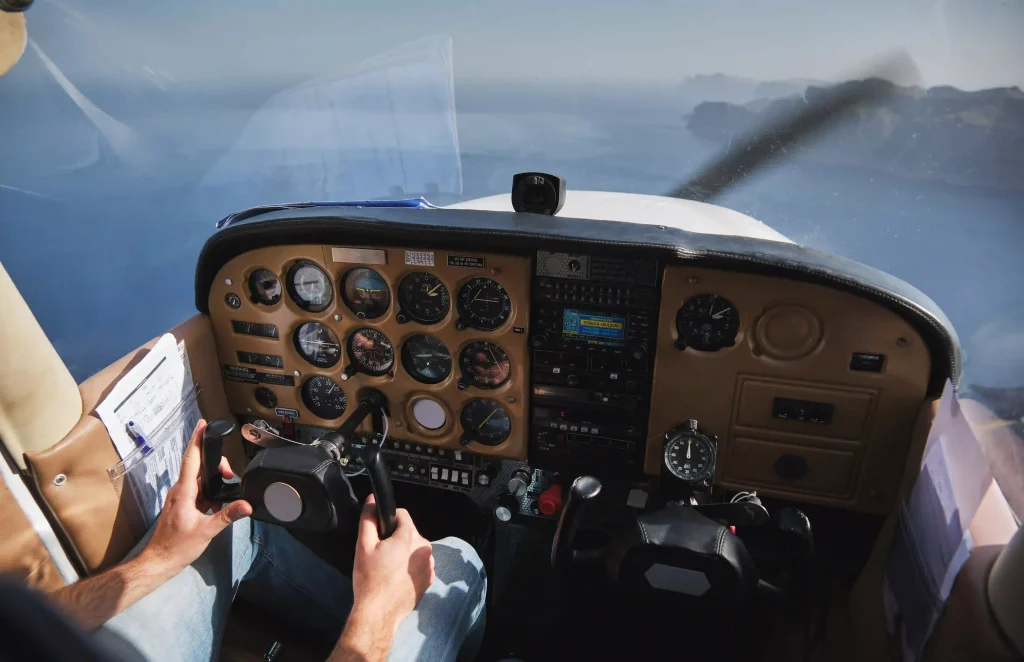
For many, becoming a commercial pilot is the ultimate dream. Becoming a pilot means life spent soaring above the clouds, exploring the world, and earning those coveted four stripes. But behind the glamorous cockpit photos on social media lies a journey that is intensely demanding, both mentally and physically.
Enrolling in a flight academy is not just about learning how to steer an aircraft. It is a complete transformation into a disciplined, highly competent aviation professional. If you are ready to trade the fantasy for the reality, here are five essential truths about flight training you need to know before you clear for takeoff and how Alpha Aviation Group (AAG) Indonesia is uniquely equipped to help you conquer every single one.
1. Ground School is Just as Demanding as Flight Training
When aspiring aviators like you picture flight school, you probably imagining spending most of your time strapped into the cockpit, pushing the throttle forward, and soaring through the clouds. Yet the reality, however, is that before you can safely command an aircraft, you must first master the skies on paper.
Ground school is a rigorous academic marathon that catches many new cadets by surprise. To become a safe and competent pilot, you must dive deep into complex subjects like aerodynamics, aviation meteorology, air law, and advanced navigation. It requires intense focus, late-night reading, and strong study habits, proving that the best aviators are also exceptional students long before they ever leave the tarmac.
At AAG Indonesia, we understand that a flawless theoretical foundation is the backbone of a successful airline career. That is why our curriculum is designed to academically over-prepare you for the flight deck. Our foundational Private Pilot License (PPL) phase alone requires a dedicated 70 hours of ground training, while our comprehensive Airline Pilot Pathway (APP) program immerses cadets in extensive ATPL theory to meet strict DGCA and airline standards.
To support this demanding workload, we established our headquarters at the Mega Techno City complex in Batam. Here, our modern, state-of-the-art classrooms provide a highly focused, distraction-free environment. Surrounded by experienced instructors and top-tier resources, you’ll have the perfect setting to conquer the books and build the knowledge required of a professional pilot.
2. Your Health and English Proficiency Are Non-Negotiable
It is easy to believe that becoming a great pilot is all about possessing natural hand-eye coordination and lightning-fast reflexes. However, you could be the most naturally gifted aviator in the world, and your career could still be grounded before it even takes off if you overlook two crucial prerequisites: your physical health and your English proficiency.
Aviation operates on incredibly strict, universally recognized safety standards. A minor, unchecked health issue or a struggle to communicate clearly over a crackling radio during a high-workload situation can immediately disqualify you from the flight deck. Long before you practice your first take-off, passing a rigorous medical examination and mastering aviation English are the true first tests of your readiness to fly.
At AAG Indonesia, we do not compromise on these prerequisites because our mission is to train cadets to professional airline standards from day one. To begin your training, you must secure a DGCA Class 2 Medical Certificate (for foundational programs like PPL) and ultimately a Class 1 Medical Certificate for commercial operations, ensuring you meet the stringent health standards set by Indonesia’s Directorate General of Civil Aviation.
Furthermore, because English is the undisputed language of the skies, AAG requires a solid TOEIC score with minimum of 600 for our core licenses and a 700 for our comprehensive Airline Pilot Pathway (APP) program. We enforce these benchmarks not to create unnecessary hurdles, but to guarantee that when you are commanding an aircraft, your communication is as flawless as your flying, making you a highly competitive and safe candidate for the airlines.
3. Mother Nature Dictates Your Schedule (and Patience is Key)
If you are someone who thrives on a rigid, predictable 9-to-5 schedule, flight school will quickly teach you the art of flexibility. As a pilot in training, you have to be a friend with Mother Nature. Because it is completely normal for students to feel frustrated when a perfectly planned cross-country flight is suddenly scrubbed due to low cloud ceilings, shifting winds, or an unexpected thunderstorm.
However, learning to accept delays is also a critical part of your aviation education. Understanding meteorology isn’t just about passing a written ground school exam. It’s about cultivating the judgment to make tough, conservative go or no-go decisions on the tarmac. Patience, adaptability, and a profound respect for weather conditions are the true hallmarks of a safe and professional aviator.


This is exactly why AAG Indonesia deliberately embraces what we call “The Riau Advantage.” Our expansive operating area around Batam and Bintan, anchored by operations out of Hang Nadim International Airport, exposes our cadets to a dynamic range of tropical weather patterns. While flying every day in clear, cloudless skies might seem ideal for quickly logging hours, it does a disservice when preparing you for the realities of commercial flying.
By navigating the shifting sea breezes, rapid cloud formations, and diverse airspace conditions of the Riau archipelago, our cadets graduate as highly adaptable, weather-savvy pilots. You learn to confidently read the sky and manage the elements in real-time which will giving you a distinct edge over pilots who have only ever trained in perfect conditions.
4. Simulators aren’t just A Simulation, Its Your Secret Weapon for Success
It is a common misconception among new cadets to view simulator sessions as secondary training, often rushing through them to get back to logging actual airborne hours. However, experienced aviators know that flight simulators are arguably the most powerful instrument in a pilot’s training arsenal.
In a real aircraft, the inherent stress of managing live radio communications, unpredictable turbulence, and active airspace can easily distract you from the core learning objectives of a new, complex maneuver. Simulators remove these external pressures, allowing you to hit pause, reset, and safely master high-stakes scenarios such as severe weather encounters, complete electrical failures, and intricate instrument approaches long before you ever face them in the real sky.
At AAG Indonesia, we deeply integrate this in mind into our curriculum using our advanced Redbird MCX simulators, housed at our Mega Techno City headquarters. We believe that professional flying is rooted in repetition and precision, which is why programs like our Instrument Rating (IR) and Multi-Engine Rating (MER) rely heavily on simulator hours. For instance, our IR cadets spend 40 rigorous hours in the Redbird MCX perfecting zero-visibility flying and procedural discipline before they ever practice those skills in our Cessna 172s.
Similarly, MER students use the simulator to safely practice asymmetric thrust and engine-out emergencies before taking the controls of the twin-engine Piper Seneca. By treating the simulator with the exact same respect as a real aircraft, AAG ensures that our cadets transition to the actual flight deck with profound confidence and elite technical proficiency.
5. Learning to Fly is a Marathon of Discipline, Not Just a Joyride
It is easy to look at aviation through a romantic lens imagining every flight as a scenic joyride into the sunset. However, the reality of a flight training program is far closer to an intense academic and physical marathon. Completing a comprehensive curriculum typically takes around 18 months of unbroken, rigorous focus.
To succeed, cadets must treat flight school not as an extended college course, but as a highly demanding full-time job. It requires waking up early for weather briefings, staying late to study complex aircraft manuals, managing the inherent stress of constant flight evaluations, and maintaining an unshakeable professional mindset day in and day out.
This is exactly why AAG Indonesia operates on a core principles of immersing our cadets in a professional airline atmosphere from day one. We don’t just teach you how to maneuver an aircraft because we mold you into an airline-ready First Officer. While the journey is undeniably long and demanding, choosing a fully integrated program like our Airline Pilot Pathway (APP) provides a distinct advantage.
Instead of forcing you to piece together your training step-by-step at different schools, our APP gives you a clear, highly structured roadmap which taking you seamlessly from zero flight hours all the way through to your advanced Multi-Crew Cooperation (MCC) and Jet Introduction courses. By training in a facility that mirrors the exact expectations, discipline, and operational tempo of a major carrier, you cross the finish line not just with a pilot’s license, but fully prepared to take command on the commercial flight deck.
Conclusion
The path to the commercial flight deck is undeniably challenging, but with the right mindset and the right training partner, it is the most rewarding journey you will ever embark upon. Becoming a successful pilot requires more than just passion. It demands a flight academy that will push you, support you, and hold you to the highest global airline standards from the very beginning.
At AAG Indonesia, we are committed to shaping the next generation of top-tier aviators. Whether you are starting from zero flight hours in our fully integrated Airline Pilot Pathway (APP) program or adding an advanced rating to your existing license, we provide the cutting-edge infrastructure, expert instruction, and rigorous environment you need to succeed.
Don’t just dream of flying, be prepared to lead. Contact our admissions team today at id.info@aag.aero or reach out to us at +6281196955717 to learn more about our upcoming intakes at our Batam headquarters. Take the first definitive step toward your aviation career today—your captain’s seat is waiting.