
Flying a commercial airliner demands far more than academic brilliance. When emergencies strike, the pilot’s mind becomes the only critical instrument.
The writing is based on an AAG Indonesia webinar session with Troy Sarayar, here we are answering what does an airline look for and why exceptional aviators master a delicate balance of stability and adaptability.
Are you ready to deep dive into the intelligence and mental model of an airline officer? Let’s begin.
Emotional Stability and Cognitive Resilience
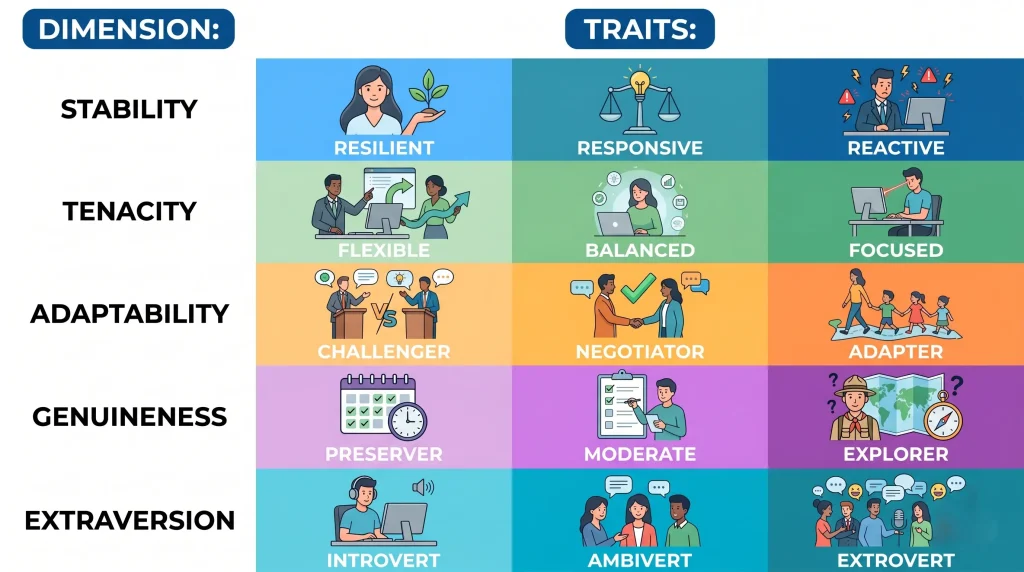
At the core of this cognitive framework lies emotional stability. A foundational trait that clearly distinguishes a “resilient” aviator from a “reactive” one.
In the aviation context, a resilient individual remains consistently calm, composed, and controlled, viewing unexpected system anomalies as manageable operational tasks rather than immediate existential threats.
Conversely, a reactive individual is prone to sudden tension and rapid stress escalation. A condition where it becomes a highly dangerous tendency when managing the delicate balance of a commercial flight.
During the rigorous psychological profiling stages at academies like AAG Indonesia, assessors actively evaluate this baseline emotional regulation to ensure a cadet has the innate temperament to lead a flight deck, rather than surrender to panic.
However, maintaining a calm temper is only one half of the equation. Because true pilot aptitude extends far beyond traditional academic intelligence.
While a high IQ or a flawless academic record in physics and mathematics demonstrates a candidate’s capacity to understand complex aerodynamics and navigation theory, it does not guarantee operational success.
The modern flight deck is an unforgiving environment. It is a space where theoretical brilliance must instantly translate into practical, high-stakes decision-making.
Airlines and recruiters understand a fundamental truth: a cadet who can effortlessly ace a written exam in a quiet room might still become entirely overwhelmed when faced with blaring master alarms and a rapidly deteriorating weather situation.
This is where the critical cognitive requirement of parallel processing comes into play. Complex problem-solving in the air demands the extraordinary ability to process multiple, fast-moving streams of information simultaneously without cognitive overload.
When an emergency arises, a pilot must seamlessly interpret decaying airspeed, navigate complex airspace, communicate with Air Traffic Control (ATC), and execute emergency procedures all under terrifying pressure.
The pilot’s brain must act as an elite multi-core processor, filtering out severe distractions to maintain absolute situational awareness without “freezing” at the controls.
It is exactly blend of mental resilience and rapid cognitive processing ability. An ability that aviation academies must identify before a cadet is ever entrusted with a commercial aircraft.
Navigating Tenacity and Adaptability
Beyond sheer processing power, evaluating a cadet’s psychological aptitude requires examining how they manage the delicate tightrope of tenacity. Psychometric testing carefully measures a candidate’s focus, but airlines are deeply wary of the extremes.
An excessively “focused” individual might initially seem like an ideal student. However in a dynamic cockpit, rigid hyper-focus can induce dangerous tunnel vision, destroying the ability to multitask.
A pilot must continuously maintain an active instrument scan, interpret Air Traffic Control instructions, and manage complex aircraft systems simultaneously; locking onto a single problem is a fatal flaw.
Conversely, an overly “flexible” candidate who lacks intrinsic discipline is equally perilous. Considering that they are prone to developing highly unstructured work habits that violate strict Standard Operating Procedures (SOPs).
The modern flight deck demands the perfect middle ground: unwavering, structured dedication that never compromises broader situational awareness.
This absolute necessity for a balanced personality extends directly into adaptability. It is a trait that fundamentally underpins the success of modern Crew Resource Management (CRM).
Because flying a commercial airliner is not a solo endeavor. It is a highly collaborative operation where two highly trained professionals must function as a single, cohesive unit.
When assessing adaptability, psychological screeners look for a cadet’s capacity to integrate seamlessly with diverse personalities and flying styles. Both are then are maintained to follow strict operational standards.
Falling into either extreme of the adaptability spectrum introduces severe risks to flight safety. It means that the cockpit is no place for unchecked ego, nor is it a place for total passivity.
To understand this CRM dynamic, assessors evaluate the dichotomy between “Challengers” and extreme “Adapters.” Aviation academies and airlines will swiftly reject “Challengers”.
Challenger is individuals who test as naturally aggressive, argumentative, or anti-authority. These traits completely disrupt crew harmony, leading to a hostile flight deck where critical communication breaks down.
However, extreme “Adapters” are considered just as dangerous by aviation medical examiners. A highly submissive copilot who prioritizes avoiding conflict at all costs will lack the vital assertiveness required to speak up.
If a senior captain makes a critical navigational or procedural error, an intimidated first officer who stays silent to keep the peace can inadvertently cause a catastrophic accident.
True flight deck cognition relies on a pilot being highly cooperative. Yet also confidently assertive when safety is on the line.
This strict necessity for balanced tenacity and assertiveness naturally leads to one of the most frequently asked questions in aviation psychology: are these optimal flight deck traits purely innate, or can they be actively developed?
Why Airlines Hire “Preservers”
While certain cognitive processing speeds may rely on innate baselines, the fundamental attitude a pilot holds toward structure and rules is rigorously measured. A cadet would actively molded through disciplined training.
That brings us to one of the most uniquely evaluated parameters in aviation psychology: the trait of “Openness.” In general psychology, openness to new experiences and originality is universally lauded as a sign of high intelligence and dynamic adaptability.
However, in the highly regulated, precision-driven environment of commercial aviation, this trait is viewed through an entirely different lens. Aviation academies and airline recruiters do not look for highly “open” individuals eager to reinvent the wheel. Instead, they seek candidates whose psychological profile aligns with a deep, unwavering respect for proven safety structures.
Because of this unique industry demand, psychometric evaluations heavily favor candidates classified as “Preservers.”
Preserver
A Preserver represents the ideal aviation candidate: a strict, methodical rule-follower. A cadet who finds genuine comfort and professional purpose in executing SOPs to the absolute letter.
For a preserver, the pre-flight checklist is not a mere suggestion or a tedious bureaucratic hurdle. Pre-flight checklist is the undisputed tasks of flight deck safety.
When a cadet demonstrates this trait, academies like AAG Indonesia recognize a student who will inherently respect the operational limitations of the aircraft. They will consistently adhere to strict air traffic control clearances without hesitation.
Furthermore, these cadets maintain the predictable, standardized behaviors essential for aviation safety. This disciplined approach ensures they can keep hundreds of passengers safe at 35,000 feet.
Explorer
Meanwhile, the aviation industry approaches the opposite end of the spectrum of preserver that is the “Explorer” with extreme caution.
In traditional corporate sectors like tech or marketing, “out-of-the-box” thinking, rapid improvisation, and disruptive creativity are highly celebrated and rewarded. On a commercial flight deck, however, those exact same qualities are terrifying liabilities.
Some pilots feel constrained by rigid Standard Operating Procedures (SOPs) and may be tempted to improvise creatively.
However, stepping outside established safety protocols introduces unpredictable and unquantified risks into the system. Aviation relies entirely on predictable outcomes, making such improvisation a dangerous liability.
While a pilot must certainly be adaptable to sudden weather changes or mechanical failures, that adaptation must always occur strictly within the framework of approved emergency checklists. Ultimately, psychometric screening proves that in the world of professional aviation, disciplined preservation will always triumph over creative exploration.
Now, you might ask: do introversion and extroversion also affect an officer’s quality? Which airline does the airline prefer more? To answer that, let’s explore how a person’s tendency has an impact on the cockpit.
The Ambivert Advantage
While disciplined preservation dictates how a pilot operates, the environment of the commercial flight deck determines who can truly endure it. This distinction separates those who simply possess the skills from those who can thrive in the cockpit’s unique, isolated demands.
Navigating the skies requires an individual who is fundamentally comfortable with prolonged isolation. This condition making a strong undercurrent of introversion a vital psychological asset.
For hours on end, modern aviators operate within a confined, highly controlled space. They tasked with vigilantly monitoring relatively static digital instruments and automated systems.
Introversion
A highly extroverted candidate who constantly craves external stimulation, dynamic physical activity, and continuous social interaction will quickly succumb to boredom and cognitive fatigue.
To maintain absolute situational awareness on a long-haul flight, a pilot must possess the introverted endurance to remain comfortable, sharply focused, and mentally engaged in relative solitude without losing their vigilance.
Yet, a pilot cannot be entirely insulated within their own mind. This necessary introverted endurance must be perfectly counterbalanced with a critical dose of extroverted assertiveness.
Extroversion
When an operational challenge arises like negotiating a complex weather deviation or managing an in-flight emergency. A pilot must instantly project their voice and authority.
That burst of extroverted energy is absolutely fundamental to facilitating clear, confident, and highly effective communication.
A flight officer must also actively coordinate with ATC, brief the cabin crew, and share vital operational data with their co-pilot.
As dictated by modern CRM, an aviator must possess the social confidence. They need to speak up, command a room, and articulate critical decisions under extreme pressure without a trace of hesitation.
Ambiversion
Ultimately, aviation academies and airline recruiters are hunting for a highly specific hybrid: the ambivert. This psychological sweet spot represents the ultimate cognitive blueprint for modern aviation.
The ideal cadet embodies the introverted discipline to methodically monitor systems for hours without their focus drifting, seamlessly fused with the extroverted communication skills required to lead a crew through a high-stakes crisis.
AAG Indonesia rigorously evaluates core psychometric traits, ranging from emotional stability and procedural preservation to a vital ambivert balance.
By doing so, we ensure our graduates are not merely capable of flying an aircraft. They develop into elite, airline-ready professionals. These individuals possess minds that are perfectly engineered for the flight deck.
Ultimately, this comprehensive assessment allows our cadets to confidently command the skies.
When Does Psychometric Testing Begin?
To guarantee that a cadet’s mind is perfectly engineered for the commercial flight deck, the validation process must begin long before they ever step into a simulator. This is achieved through rigorous, standardized psychometric testing, utilizing established frameworks like the “Big Five” personality traits alongside specialized cognitive aptitude assessments.
However, these complex tools do not simply output raw, uncontextualized scores.
Aviation psychologists and assessment bodies rely heavily on carefully calibrated norms and age-specific adjustments. They compare individual results against a massive, continuously updated database of successful aviators.
The process would allows recruiters to accurately interpret a candidate’s emotional stability, procedural preservation, and tenacity. Therefore, the process ensures that every applicant is measured against the strict psychological blueprints required by premier airlines.
Because these psychometric norms are so precisely and reliably adjusted across different demographic groups, early detection of pilot aptitude is highly effective. It is a common misconception that a candidate must wait until full adulthood to be evaluated for complex flight deck cognition.
Modern psychometric tests allow for accurate psychological profiling from as early as 17 years old. This capability aligns perfectly with the minimum age requirement for enrollment at AAG Indonesia.
Even at this relatively young age, modern assessments can successfully identify the innate presence of that critical ambivert advantage, as well as the raw cognitive processing speed necessary to handle parallel emergencies.
Now, implementing rigorous level of psychological screening at the very start of the admissions process is about securely shaping the future of the aviation industry.
Transforming a passionate 17-year-old student into an airline-ready first officer requires a massive investment of time. It also need elite instructional mentorship, and highly expensive training hours in advanced aircraft and full-motion simulators.
However, early testing guarantees that flight academies and sponsoring airlines are directly investing their vast resources into right cadets. The one whose mental is naturally suited for the intense rigors of flight.
By ensuring the psychological foundation is rock-solid from day one, AAG Indonesia can confidently focus on what we do best: building the ultimate, career-ready aviator.
Conclusion
“The pilot selection process assesses not only cognitive abilities and technical skills, but also the personality traits that support safe operations behavior.” — Troy Sarayar, FirstAsia Consultants
In conclusion, the ideal pilot is not merely the smartest person in the room. It is the one who has the most perfectly balanced mental quality.
True flight deck aptitude demands an aviator who is deeply resilient under extreme pressure. Strictly dedicated to executing standard procedures, and perfectly balanced between introverted focus and extroverted crew communication.
Aviation academies can meticulously teach and refine the physical and technical skills required to fly through our Redbird MCX simulators. However, the underlying psychological architecture needed to safely command a flight remains a fundamental, non-negotiable trait.
In the unforgiving realm of professional aviation, human factors are paramount. Emotional discipline and structural clarity are essential for every pilot.
Furthermore, the cognitive bandwidth to solve complex problems must be prioritized. These traits will always override pure ego or panic when lives are genuinely on the line.
Now, the final question is, are you actively considering a career in the skies?
Before you ever step into the cockpit or lay your hands on the controls of an aircraft, take a crucial moment to honestly evaluate your own mental baseline.
Ask yourself if you possess the delicate “Big Five” psychological balance required to confidently command a commercial airliner through both routine schedules and sudden crises.
If you believe you have the innate resilience, procedural discipline, and adaptability to meet these elite industry standards. AAG Indonesia is ready to help you transform that raw potential into a professional reality.
Contact our admissions team today to begin your comprehensive assessment and take your definitive first step toward the flight deck.